



Businesses in Syria face a range of operational challenges, from managing purchasing and inventory to maintaining financial visibility and coordinating activities across different locations. For organizations working with local suppliers, international vendors, distributors, or project-based customers, disconnected systems can make it difficult to maintain accurate records and respond efficiently to changing business needs.
As companies work to improve their operations and plan for future growth, an integrated Enterprise Resource Planning (ERP) system can provide a more structured way to manage business information and processes.
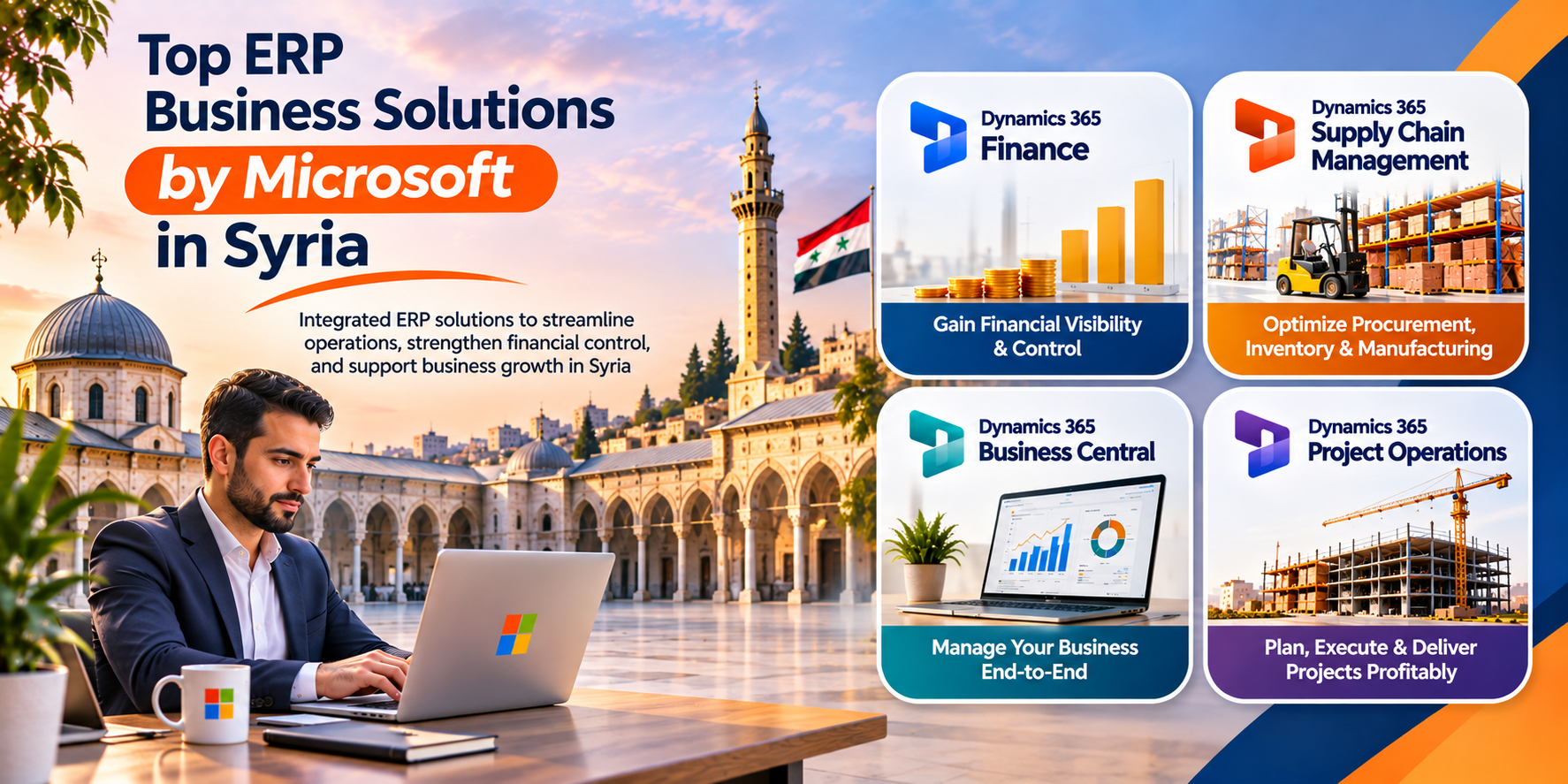
Microsoft Dynamics 365 offers a portfolio of ERP applications covering financial management, supply chain operations, business management, and project delivery. Each solution addresses a different set of requirements, allowing organizations to evaluate the capabilities that best match their operating model.
For Syrian businesses considering ERP modernization, selecting the right system requires looking beyond software features. Company size, industry, infrastructure, local operating requirements, and plans for future expansion all play an important role.
What Is Microsoft ERP Software?
Enterprise Resource Planning (ERP) software connects the main functions of a business through shared information and coordinated workflows. It allows departments such as finance, procurement, sales, inventory, manufacturing, and project management to work with more consistent data.
Instead of depending on separate spreadsheets and applications, organizations can use an ERP platform to manage transactions, monitor operations, and produce reports from a more unified business environment.
Microsoft Dynamics 365 provides several ERP applications designed for different business sizes and operational requirements. Organizations can select the solution that fits their current needs and consider additional applications as their processes become more complex.
For businesses in Syria, ERP capabilities may be particularly relevant when managing inventory across multiple locations, coordinating local and international purchasing, handling different currencies, monitoring production activities, and maintaining financial records across departments.
Top 4 Microsoft ERP Business Solutions for Companies in Syria
Microsoft Dynamics 365 includes applications for different business functions. The following four solutions are worth evaluating when Syrian organizations consider implementing or upgrading their ERP systems.
1. Microsoft Dynamics 365 Finance
Best suited for: Large organizations, corporate groups, and businesses with demanding financial management requirements.
Microsoft Dynamics 365 Finance helps organizations manage financial activities, strengthen financial controls, and improve visibility into their financial performance.
For Syrian companies managing several branches, business units, or subsidiaries, maintaining consistent financial records can be challenging. Different currencies, purchasing arrangements, payment procedures, and reporting requirements can make it harder to consolidate information and understand the overall financial position.
Dynamics 365 Finance provides capabilities for general ledger, accounts payable and receivable, budgeting, cash management, financial planning, and reporting.
It can help businesses:
-
Consolidate financial information across multiple entities and business units.
-
Monitor cash flow, expenses, budgets, and financial performance.
-
Organize supplier payments and customer collection processes.
-
Improve financial planning and management reporting.
-
Manage transactions involving different currencies.
-
Configure financial and tax processes according to applicable requirements.
For larger Syrian organizations looking to establish more structured financial processes, the solution can provide a stronger foundation for financial oversight and business planning.
Learn more: Microsoft Dynamics 365 Finance.
Microsoft Dynamics 365+1
2. Microsoft Dynamics 365 Supply Chain Management
Best suited for: Manufacturing companies, wholesalers, distributors, and businesses managing complex procurement and inventory operations.
For businesses that depend on sourcing materials, maintaining stock, and delivering products to customers, supply chain coordination has a direct impact on operational efficiency and costs.
In Syria, manufacturers and distributors may need to work with different local and international suppliers, manage the availability of imported materials, and coordinate stock across warehouses and sales locations. Limited visibility into these activities can lead to purchasing delays, inventory imbalances, and production interruptions.
Microsoft Dynamics 365 Supply Chain Management connects supply chain activities through capabilities covering procurement, demand planning, inventory, warehouse management, manufacturing, and order fulfillment.
Key business benefits include:
-
Monitoring stock availability across warehouses and storage locations.
-
Coordinating purchasing activities with production and sales requirements.
-
Improving demand forecasting and inventory replenishment.
-
Tracking supplier performance and procurement costs.
-
Organizing production schedules and manufacturing resources.
-
Improving warehouse processes and customer order fulfillment.
For Syrian manufacturing and distribution businesses, these capabilities can help create better coordination between purchasing, inventory, production, and sales teams.
Learn more: Microsoft Dynamics 365 Supply Chain Management.
Microsoft Dynamics 365+1
3. Microsoft Dynamics 365 Business Central
Best suited for: Small and medium-sized businesses seeking an integrated system for finance and everyday operations.
As businesses grow, managing accounting, sales, purchasing, and inventory through separate applications can become increasingly difficult. Information may be duplicated, reports may take longer to prepare, and management teams may not have a complete view of business performance.
Microsoft Dynamics 365 Business Central brings essential business functions together in one ERP application, helping organizations manage daily operations through connected information.
For Syrian SMEs, this can be a practical step toward replacing disconnected accounting tools and spreadsheets with a more organized business management system.
Business Central includes capabilities for financial management, sales, purchasing, inventory, warehouse operations, and selected manufacturing and project management activities.
It can help growing businesses:
-
Connect accounting records with operational transactions.
-
Manage purchasing, sales, inventory, and supplier information.
-
Monitor revenue, expenses, cash flow, and business performance.
-
Improve coordination between finance and operational teams.
-
Access reporting and analysis through Microsoft ecosystem integrations.
-
Expand system functionality as business requirements evolve.
For companies looking to improve internal organization without immediately adopting a more complex enterprise ERP environment, Business Central can offer a suitable starting point.
Learn more: Microsoft Dynamics 365 Business Central.
Microsoft Dynamics 365+1
4. Microsoft Dynamics 365 Project Operations
Best suited for: Construction and engineering firms, consulting companies, IT service providers, and project-driven businesses.
Organizations that deliver projects need to control more than schedules. They must also manage employee assignments, project budgets, material costs, customer commitments, and financial results.
For Syrian businesses involved in construction, infrastructure rehabilitation, engineering, and professional services, managing several contracts at once can require close coordination between commercial, operational, and finance teams.
Microsoft Dynamics 365 Project Operations connects project sales, resource planning, project management, time and expense tracking, and financial processes.
Its capabilities can help organizations:
-
Prepare project estimates and customer quotations.
-
Allocate employees and resources according to project needs.
-
Monitor project schedules, budgets, and delivery progress.
-
Record employee time, expenses, and project-related costs.
-
Improve coordination between sales, project managers, and finance teams.
-
Evaluate project performance and profitability.
For Syrian companies managing contracts or project-based services, Project Operations can help improve visibility into project commitments, resource utilization, and financial outcomes.
Learn more: Microsoft Dynamics 365 Project Operations.
Microsoft Dynamics 365+2
How to Choose the Right Microsoft ERP Solution for Your Business in Syria
Selecting an ERP system should begin with an understanding of the organization’s current processes and the operational improvements it wants to achieve. The best solution will depend on business size, industry, financial structure, and the complexity of daily operations.
The following considerations can help guide the decision:
-
Financial management needs: If your company requires consolidated reporting, budgeting, cash flow management, and financial control across several entities, Dynamics 365 Finance may be the right fit.
-
Procurement and inventory requirements: If your operations involve manufacturing, importing, warehousing, or large-scale distribution, Supply Chain Management may offer the capabilities you need.
-
Business size and growth plans: If you are an SME looking to connect accounting, sales, purchasing, and inventory, Business Central can provide an integrated business management platform.
-
Project-based operations: If your company manages construction contracts, engineering assignments, or professional services, Project Operations can help manage resources, costs, and delivery performance.
Businesses in Syria should also evaluate practical implementation considerations before selecting a solution. These include local financial and tax requirements, currency management, data migration, internet and infrastructure reliability, and the systems that need to be integrated.
It is particularly important to confirm Microsoft licensing and service availability, payment arrangements, and any applicable sanctions or export-control requirements with Microsoft and the authorized implementation partner before committing to a deployment.
What Microsoft Dynamics 365 ERP Can Bring to Businesses in Syria
An ERP implementation can help businesses establish more consistent ways of managing information, coordinating departments, and monitoring daily operations.
For Syrian organizations working to improve efficiency and prepare for future business opportunities, Microsoft Dynamics 365 can support several important objectives:
-
Improved business visibility: Give management teams a more connected view of financial and operational information.
-
More organized financial processes: Strengthen control over budgets, expenses, payments, and financial reporting.
-
Better inventory management: Improve oversight of stock, purchasing, warehousing, and product movement.
-
Stronger operational coordination: Connect activities across procurement, production, sales, and finance.
-
More reliable business reporting: Use structured data to evaluate performance and identify areas requiring attention.
-
A foundation for business expansion: Build an ERP environment that can adapt as operations, locations, and business requirements change.
Syria’s economic recovery is also creating a renewed focus on modernizing business and financial infrastructure. The World Bank’s 2026 financial sector modernization project highlights the need for safer digital financial services and more efficient transactions, while the UNDP identifies the private sector as an important contributor to economic renewal. These developments underline the growing relevance of reliable information systems and better-managed business processes.
World Bank+2
Microsoft Dynamics 365 ERP Implementation: What Should Businesses Consider?
Choosing an ERP application is only the beginning. A successful implementation requires preparation, a clear understanding of business processes, and a realistic plan for moving from existing systems to the new environment.
Before starting an ERP project in Syria, organizations should consider the following:
-
Evaluate existing operations: Review how finance, purchasing, sales, inventory, and other departments currently work. Identify duplicated tasks and operational gaps.
-
Define implementation priorities: Decide which business processes should be addressed first and which capabilities can be introduced in later phases.
-
Review local requirements: Assess applicable tax, accounting, financial reporting, and documentation requirements with qualified local advisors and the implementation partner.
-
Prepare business data: Organize financial records, customer and supplier information, stock records, and other operational data before migration.
-
Assess infrastructure and integrations: Review connectivity, hosting and access requirements, security, and the applications that need to exchange information with the ERP.
-
Train employees: Prepare users for the new processes through role-based training, practical guidance, and ongoing support.
For organizations operating in challenging infrastructure environments, implementation planning should also account for system accessibility, data protection, backup procedures, and business continuity.
The goal should be to introduce a system that supports the organization’s real operational needs and can be maintained as the business develops.
Conclusion
Microsoft Dynamics 365 provides several ERP solutions that can address the needs of businesses in Syria, from growing SMEs to larger organizations managing complex financial, supply chain, manufacturing, and project operations.
Dynamics 365 Finance, Supply Chain Management, Business Central, and Project Operations each serve different business requirements. Selecting the appropriate application depends on the company’s operating model, current challenges, available infrastructure, and future objectives.
With the right ERP strategy and a carefully planned implementation, Syrian businesses can improve coordination between departments, strengthen operational control, and build a more structured foundation for future growth.
BI-Technologies helps businesses explore Microsoft Dynamics 365 ERP solutions and identify the right approach based on their operational requirements.
Ready to explore the right ERP solution for your business? Request a demo.